Short answer
Makrana marble is a white marble quarried around the town of Makrana in Rajasthan, India. It is dense, fine-grained and unusually white, which is why it was chosen for the Taj Mahal. Today it is used for floors, wall cladding, columns, staircases, carved work and inlay.
Where Makrana marble comes from
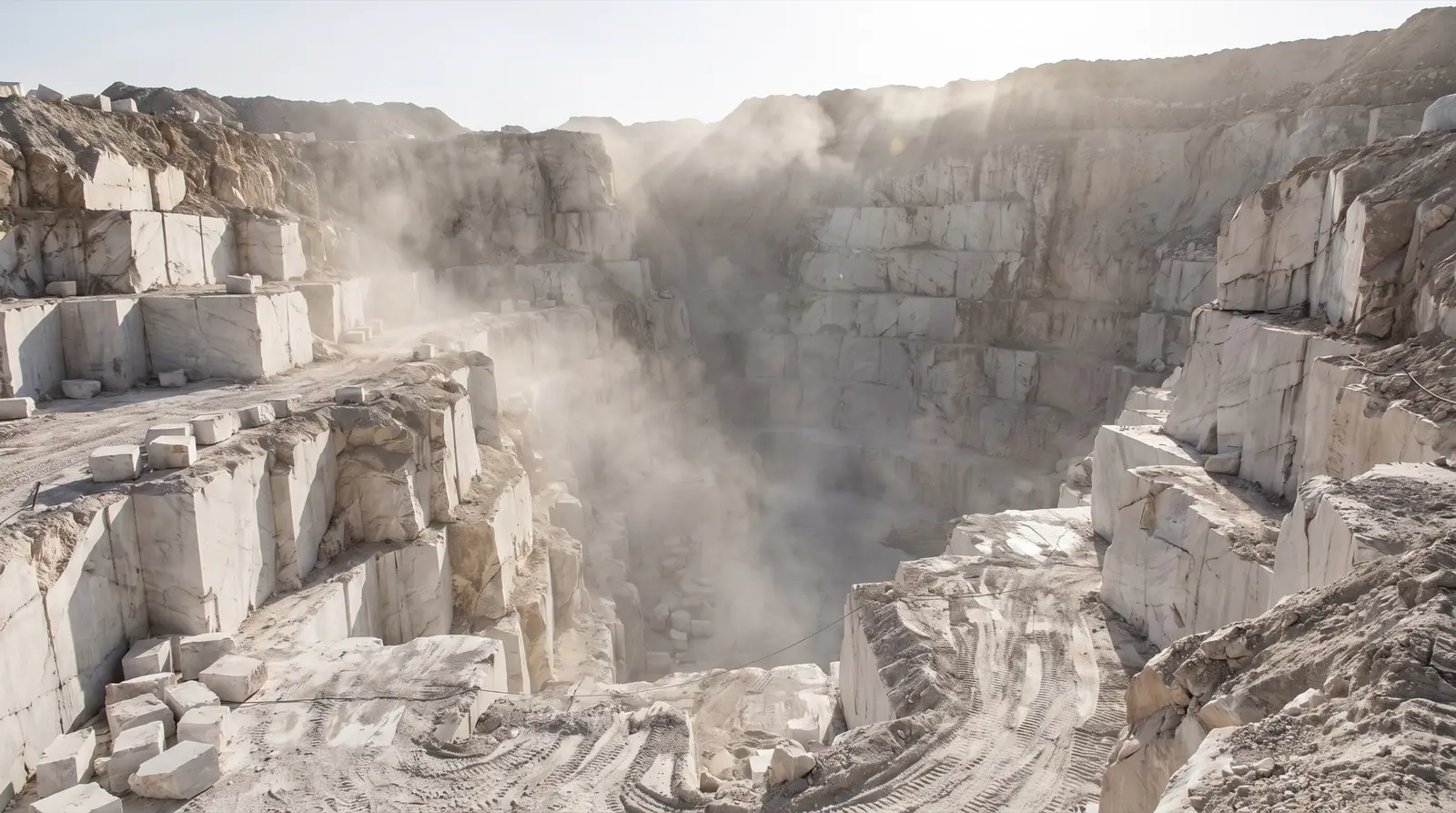
Makrana is a marble town in central Rajasthan, west of Jaipur. The quarries there have been worked for centuries, and the town's craftsmen have carved and inlaid marble for almost as long.
Everstone has quarried and worked Makrana marble since 1986, supplying slabs and finished pieces to clients across India and abroad.
What makes it different
Makrana marble is a dense, crystalline stone with a very fine, even grain. That density gives it low porosity for a marble, so it takes a high polish and weathers well outdoors, which is why monuments built from it have lasted for centuries.
Its ground colour is a clean white, often with soft grey or cream veining depending on the seam it is cut from. Blocks from the same seam are selected together when a project needs the colour and vein to match across a room.
Where it works best
Because it is strong and polishes well, Makrana marble suits floors and staircases, wall cladding, columns and architectural carving, bathrooms and bathtubs, and pietra dura inlay, where coloured stones are set into the white marble.
It can be finished polished, honed or matt. Polished suits interiors; honed or textured finishes are better underfoot outdoors and around water. See our marble series for the range by colour.
Buying Makrana marble
Ask for the grade and the seam, see slabs or samples in daylight, and confirm thickness for the use: thinner slabs for cladding, thicker for treads and countertops. For a large project, reserve all the stone from the same lot so it matches.